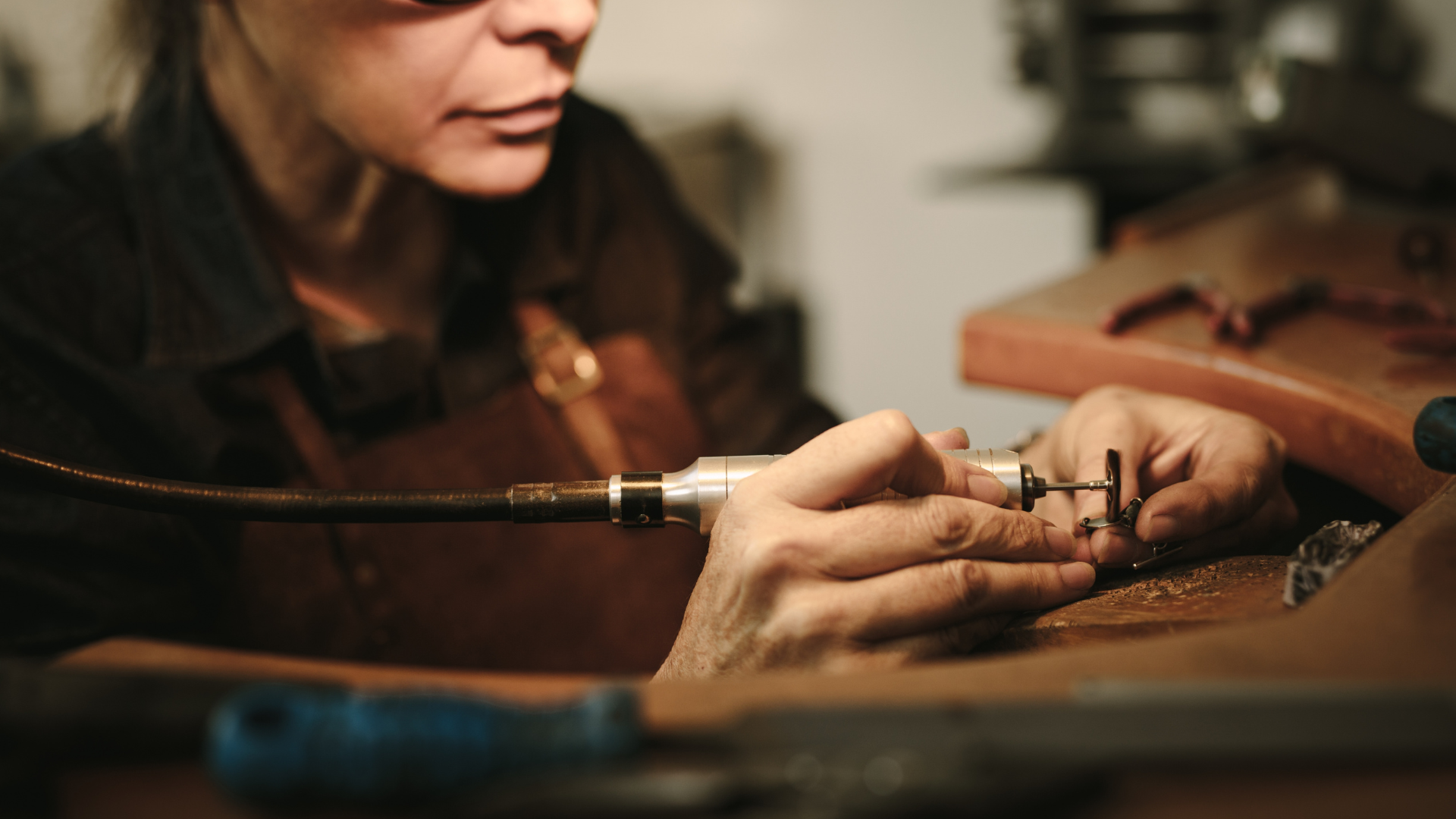
Equipment Guide: What You'll Need to Scale Production
A comprehensive guide to the equipment and tools required to transition from artisan workshop to commercial manufacturing operation.
November 5, 2025
•
By F3 Team
One of the biggest barriers to scaling an artisan business is equipment. Professional-grade manufacturing tools can cost tens or hundreds of thousands of dollars - far beyond what most solo makers can afford. At F3, we provide access to this equipment, but it helps to understand what you’ll actually need and why.
The Equipment Gap: Hobby vs. Production
Let’s be honest about the difference between hobbyist tools and production equipment:
Hobbyist Equipment:
- Built for occasional use
- Lower precision tolerances
- Smaller capacity
- Consumer-grade durability
- Limited safety features
Production Equipment:
- Designed for daily, heavy use
- High precision and repeatability
- Larger capacity and faster operation
- Industrial durability
- Comprehensive safety systems
You can create beautiful work with hobbyist tools. But you can’t efficiently produce 100 units a month with them. Scaling requires production-grade equipment.
Equipment by Industry: What F3 Provides
Metalworking & Jewelry
Welding Equipment
What: TIG and MIG welders, plasma cutters Why: Professional welds for structural integrity and aesthetics Scale impact: 5-10x faster than hand joining, better quality control
Metal Fabrication Tools
What: Industrial shears, brakes, rollers, punches Why: Consistent, repeatable cuts and forms Scale impact: Reduce material waste by 20-30%, increase production speed
Finishing Equipment
What: Industrial polishers, tumblers, sandblasters Why: Consistent finish quality across all units Scale impact: Professional results at 3-5x the speed of hand finishing
Jewelry-Specific Tools
What: Casting equipment, kiln, professional polishing stations Why: Quality and capacity beyond bench-scale equipment Scale impact: Ability to produce multiples from single mold, consistent quality
Textile & Fiber Arts
Industrial Sewing Machines
What: Commercial-grade machines for various fabric types Why: Speed, stitch quality, heavy-duty capacity Scale impact: 10x faster than domestic machines, better stitch integrity
Cutting Equipment
What: Professional cutting tables, rotary cutters, pattern-making tools Why: Accurate cuts reduce waste and assembly time Scale impact: Cut multiple layers simultaneously, reduce material waste by 15-25%
Pressing & Finishing
What: Industrial irons, steamers, pressing stations Why: Professional finish, faster processing Scale impact: Consistent, professional results
Leather Goods
Cutting & Stamping
What: Hydraulic clicker presses, steel rule dies Why: Consistent cuts, reduce hand fatigue, increase speed Scale impact: 20x faster than hand cutting, zero waste from mistakes
Sewing Equipment
What: Industrial leather sewing machines Why: Handle thick materials, create strong, consistent stitching Scale impact: Professional-quality stitching at higher speeds
Finishing Tools
What: Edge bevelers, burnishers, dye stations Why: Consistent edge finishing and coloring Scale impact: Professional results, faster production
Shared Equipment (All Industries)
CNC Machines
What: Computer-controlled routers, mills Why: Precise, repeatable cuts and forms; ability to create complex designs Use cases: Custom molds, precise patterns, decorative elements Scale impact: Create once, produce many times with perfect consistency
3D Printers
What: Professional-grade FDM and resin printers Why: Rapid prototyping, custom tooling, small production runs Use cases: Jewelry molds, product prototypes, custom jigs and fixtures Scale impact: Prototype in days, not weeks; create custom tools affordably
Laser Cutters
What: CO2 and fiber laser cutting/engraving systems Why: Precise cuts and engravings in various materials Use cases: Leather cutting, metal marking, textile patterns, decorative elements Scale impact: Intricate designs that would be impossible or time-prohibitive by hand
The True Cost of Equipment
Let’s talk numbers. Here’s what this equipment actually costs to purchase:
Metalworking Setup
- Professional TIG welder: $3,000-$8,000
- Industrial shear: $2,000-$15,000
- Brake press: $3,000-$20,000
- Polishing/finishing station: $1,500-$5,000
- Safety equipment & ventilation: $2,000-$8,000
- Total: $11,500-$56,000+
Textile Production Setup
- Industrial sewing machines (3): $3,000-$9,000
- Cutting table & tools: $1,500-$4,000
- Industrial iron/press: $1,000-$3,000
- Fabric storage & organization: $500-$2,000
- Total: $6,000-$18,000+
Jewelry Studio Setup
- Casting equipment: $3,000-$15,000
- Kiln: $2,000-$8,000
- Professional polishing setup: $2,000-$6,000
- Metalsmithing tools & station: $3,000-$10,000
- Safety & ventilation: $1,500-$5,000
- Total: $11,500-$44,000+
Shared Advanced Equipment
- CNC router/mill: $10,000-$100,000+
- Professional 3D printer: $3,000-$15,000
- Laser cutter/engraver: $5,000-$50,000+
- Total: $18,000-$165,000+
Grand Total for Full Manufacturing Setup: $47,000-$283,000+
And that’s just equipment - not including facility costs, insurance, utilities, or maintenance.
The F3 Advantage: Access Without Ownership
Here’s why F3’s shared equipment model makes sense:
Financial Benefits
- No upfront capital: Access $50K-$300K in equipment without buying
- No maintenance costs: We handle repairs and upkeep
- No storage needs: Equipment stays in our facility
- Flexibility: Use what you need, when you need it
Practical Benefits
- Try before you buy: Test equipment before making big purchases
- Expert training: Learn proper use and safety from experienced operators
- Shared costs: Split expenses across multiple members
- Regular upgrades: Access to newer equipment as we upgrade facility
Strategic Benefits
- Lower risk: Test your business model before major equipment investments
- Faster scaling: Start production immediately, not after saving for years
- Professional results: Produce at commercial quality from day one
- Exit flexibility: Easier to pivot or exit if business doesn’t work out
Equipment You SHOULD Own
While we provide production equipment, there are tools you should personally own:
Hand Tools (Your Industry)
- Basic hand tools for your craft
- Portable tools you use daily
- Specialized tools specific to your technique
- Quality measuring and marking tools
Cost: $500-$3,000 (one-time, gradually built)
Safety Equipment (Personal)
- Safety glasses/goggles
- Hearing protection
- Respirator/dust mask
- Work gloves
- Steel-toed boots
- Appropriate clothing
Cost: $200-$500 (non-negotiable for your safety)
Materials & Supplies
- Raw materials inventory
- Consumables (blades, bits, threads, etc.)
- Packaging materials
- Shipping supplies
Cost: Variable (scales with production)
Planning Your Equipment Needs
Accelerator Phase Questions
- What equipment is essential vs. nice-to-have?
- Which operations are bottlenecks in your current process?
- What equipment would have the biggest impact on quality?
- What equipment would most improve efficiency?
- Can you standardize processes to use available equipment?
Incubator Phase Testing
- Test different equipment options for your processes
- Document actual equipment needs based on pilot runs
- Learn proper use and maintenance
- Identify if you need specialized equipment not currently available
Production Lab Planning
- Calculate equipment utilization rates (are you using it enough?)
- Determine which equipment to purchase post-graduation
- Identify ongoing F3 membership value for expensive equipment
- Plan your independent facility equipment budget
Graduation: To Buy or Not to Buy?
As you prepare to graduate from F3, you’ll face equipment decisions:
Buy This Equipment:
- Tools you use daily
- Equipment with fast ROI (payback in 6-12 months)
- Essential tools for your core competency
- Equipment that differentiates your product
Don’t Buy (Stay F3 Member):
- Expensive equipment used occasionally
- Equipment requiring specialized maintenance
- Tools that may become obsolete
- Equipment with high space requirements
Lease or Finance:
- Equipment too expensive to buy outright
- Tools with predictable ROI
- Items that may need upgrading in 3-5 years
- Equipment for contracts with specific duration
Safety: Non-Negotiable
Access to professional equipment comes with responsibility:
Required Training
- Equipment-specific safety training
- General shop safety protocols
- Emergency procedures
- Material handling and storage
Safety Rules
- Never operate equipment without proper training
- Always use required safety equipment
- Report equipment issues immediately
- Follow lockout/tagout procedures
- No shortcuts with safety procedures
At F3, safety violations can result in membership termination. We take this seriously because your safety matters.
Common Questions
Q: Do I have to share equipment with other members? A: Yes, but we manage scheduling to ensure fair access. Popular equipment has booking systems.
Q: What if the equipment I need isn’t available? A: We’re continuously adding equipment based on member needs. We prioritize equipment that serves multiple members.
Q: Can I bring my own specialized equipment? A: In some cases, yes - discuss with F3 staff. Must meet safety standards and insurance requirements.
Q: What happens if I damage equipment? A: Accidents happen. Report immediately. Intentional misuse or repeated negligence may result in repair costs or membership consequences.
Q: Can I use equipment 24/7? A: Access hours vary by phase. Incubator and Production Lab members typically have extended access.
Ready to Access Professional Equipment?
One of the biggest benefits of joining F3 is immediate access to equipment that would take years to afford independently. This levels the playing field and lets you compete on quality and creativity, not capital.
Apply to F3 and start using professional equipment to scale your artisan business.
Have equipment questions not covered here? Contact our team to discuss your specific needs.
TAGS:
Ready to Transform Your Artisan Business?
Join F3 and get access to equipment, mentorship, and a community of makers scaling to commercial production.